
Fundamentals of Nursing Notes are incomplete without a deep understanding of Vital Signs. Vital signs are the most basic but critical functions of the human body. As a nurse, your first task for almost every patient will be to “check the vitals.” These numbers tell us if a patient is stable or in danger.
What are Vital Signs?
Vital signs (also known as vitals) are measurements of the body’s most basic functions. The four main vital signs routinely monitored by medical professionals include:
-
Body Temperature
-
Pulse (Heart Rate)
-
Respiration Rate (Breathing)
-
Blood Pressure
Note: Many hospitals now consider “Pain” as the 5th vital sign.
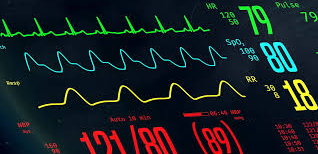
1. Body Temperature
Temperature measures the balance between the heat produced by the body and the heat lost.
-
Normal Range: 36.5°C to 37.5°C (97.7°F to 99.5°F).
-
Pyrexia (Fever): When the temperature goes above the normal range.
-
Hypothermia: When the body temperature drops below 35°C (95°F).
-
Common Sites: Oral, Axillary (underarm), Rectal, and Tympanic (ear).
2. Pulse (Heart Rate)
The pulse is the pressure wave of blood created by the heart as it pumps.
-
Normal Range: 60 to 100 beats per minute (bpm) for an adult.
-
Tachycardia: A heart rate over 100 bpm.
-
Bradycardia: A heart rate below 60 bpm.
-
Common Site: The Radial artery (at the wrist) is most commonly used. For emergencies, the Carotid artery (neck) is checked.
3. Respiration Rate
Respiration is the act of breathing. One respiration includes one full inspiration (breath in) and one expiration (breath out).
-
Normal Range: 12 to 20 breaths per minute.
-
Tachypnea: Rapid breathing (above 20).
-
Bradypnea: Slow breathing (below 12).
-
Apnea: Absence of breathing.
4. Blood Pressure (BP)
Blood pressure is the force of blood pushing against the artery walls. It is measured in millimeters of mercury (mmHg).
-
Normal Range: 120/80 mmHg.
-
Systolic (Top number): Pressure when the heart beats.
-
Diastolic (Bottom number): Pressure when the heart rests.
-
Hypertension: High blood pressure (e.g., 140/90 or higher).
-
Hypotension: Low blood pressure (e.g., below 90/60).
Clinical Tips for Nurses
When measuring vital signs, keep these points in mind to ensure accuracy:
-
Wait: If a patient just drank hot tea or smoked, wait 15–30 minutes before taking oral temperature.
-
Don’t Tell: When counting respirations, don’t tell the patient. If they know you are watching, they may change their breathing pattern.
-
Cuff Size: Use the correct size BP cuff. A cuff that is too small will give a falsely high reading.
Practice Quiz: Vital Signs MCQs
Test your knowledge with these 10 exam-style questions:
Q1: What is the normal range for an adult pulse rate?
A) 50-80 bpm B) 60-100 bpm C) 100-120 bpm D) 40-60 bpm
Q2: A blood pressure reading of 150/95 mmHg is considered:
A) Normal B) Hypotension C) Hypertension D) Bradycardia
Q3: Which term describes a respiratory rate of 8 breaths per minute?
A) Tachypnea B) Eupnea C) Bradypnea D) Apnea
Q4: The most common site for taking a routine pulse is the:
A) Carotid artery B) Femoral artery C) Radial artery D) Brachial artery
Q5: What is the normal body temperature in Celsius?
A) 35.0°C B) 37.0°C C) 39.0°C D) 32.0°C
Q6: A heart rate of 120 bpm in an adult is called:
A) Tachycardia B) Bradycardia C) Hypertension D) Arrhythmia
Q7: Which vital sign is often called the “5th Vital Sign”?
A) Blood Sugar B) Oxygen Saturation C) Pain D) Weight
Q8: One respiration consists of:
A) One breath in B) One breath out C) One inspiration and one expiration D) Two breaths in
Q9: If a patient has a temperature of 39°C, they are said to have:
A) Hypothermia B) Pyrexia C) Hypertension D) Eupnea
Q10: Which instrument is used to measure blood pressure?
A) Thermometer B) Stethoscope C) Sphygmomanometer D) Pulse Oximeter
Answer Key
-
B | 2. C | 3. C | 4. C | 5. B | 6. A | 7. C | 8. C | 9. B | 10. C
Go back to Generic BSN Year 1 for more subjects
click here .https://nurseprepify.com/category/generic-bsn/year-1/